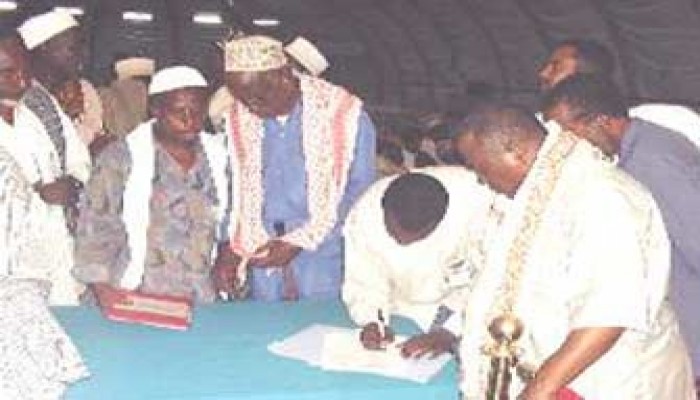
رحَّب الشارع الصومالي ومعظم الأطراف السياسية وفعاليات المجتمع المدني بالاتفاق بين الحكومة الانتقالية وتحالف المعارضة المسلَّحة في 9 يونيو بجيبوتي؛ تحت رعاية الأمم المتحدة هذه الاتفاقية في الجانب الأمني، وأبرز بنودها إنهاء الأعمال العدائية، والانخراط في العملية السياسية، وجدولة انسحاب القوات الإثيوبية المساندة للحكومة الانتقالية.
وعبَّرت بعض فصائل المعارضة المسلَّحة عن رفضها هذه الاتفاقية؛ حيث أعلنت حركة الشباب المجاهدين أنها اتفاقية غير شرعية؛ اعتبارًا من أن الحكومة الانتقالية الصومالية "حكومة مرتدة"، ومن ثم لا يجوز شرعًا التفاوض والتصالح معها، وأكدت "بأنها ستواصل جهادها ضد الحكومة الانتقالية المرتدة والقوات الإثيوبية التي تساندها"، وفي هذا الصدد شنَّت هجومًا على أحد مراكز الشرطة في العاصمة مساء الثلاثاء.
ومن جانبه أعلن الشيخ حسن طاهر أويس عضو اللجنة المركزية لتحالف المعارضة ورئيس مجلس الشورى المحاكم الإسلامية السابق رفضه هذه الاتفاقية، وقال لا يمكن أن نحقق أهدافنا عبر الحوار والتفاوض.
ويرى المحلِّلون أن هذا الاتفاق قد يساهم في وقف القصف الإثيوبي الظالم وإزالة الفرقة والاختلاف بين الأشقاء الصوماليين ووضع حدّ للتناحر والتقاتل بين الصوماليين.
وتأتي هذه الاتفاقية بعد انعقاد جولتين من المحادثات في جيبوتي، بين الحكومة الفيدرالية الصومالية والتحالف من أجل إعادة تحرير الصومال الذي يتخذ من العاصمة الإريترية أسمرة مقرًّا له بقيادة شيخ شريف شيخ أحمد رئيس مجلس المحاكم السابق، وشريف حسن شيخ آدم رئيس البرلمان السابق، وانطلقت الجولة الأولى من المحادثات في 12 مايو برعاية الأمم المتحدة على يد المبعوث الخاص للأمين العام للأمم المتحدة إلى الصومال السيد أحمد ولد عبد الله، وقد حضر اللقاء وفودٌ من كلا الجانبين بعدد 9 أشخاص من كل جانب وبحضور العديد من المسئولين الدوليين من الأمم المتحدة والاتحاد الأوروبي والاتحاد الإفريقي.
انتهت الجولة الأولى دون إعلان رسمي بالاتفاق، ولكن المبعوث الأمين العام للأمم المتحدة أحمد ولد عبد الله أعلن في مؤتمر صحفي عقده في المطار عند مغادرته جيبوتي متوجهًا إلى العاصمة الكينية نيروبي مقرّ البعثة أنه تم التوصل إلى اتفاق بين الطرفين بعدد من القضايا المطروحة؛ من بينها حلّ الخلافات بالطرق السلمية وسيعقد جولة أخرى من المحادثات في 31 مايو.
وبرزت خلال المحادثات في الجولة الأولى معارضة بعض المسئولين في المعارضة؛ مما أدى إلى حدوث انشطار داخل صف المعارضة، ويعتقد بأن هذا الانشطار لم يأتِ من فراغ، وإنما نتج عن ضغط خارجي على بعض المسئولين في التحالف، ربما من إريتريا الدولة المضيفة للتحالف، ومما يدعم هذا الاعتقاد اتهام الرئيس الإريتري في تصريحات له في 14 مايو بالأمم المتحدة الجهة المسئولة عن انعقاد المؤتمر بمحاولة تقسيم التحالف من أجل تحرير الصومال الذي أنشئ في أسمرة برعاية الرئيس الإريتري.
وردًّا على هذه التصريحات عقد رئيس المكتب التنفيذي لتحالف أسمرة في 25 مايو في جيبوتي مؤتمرًا صحفيًّا؛ اتهم فيه أسمرة بأنها تسعى إلى تقسيم تحالفه، وطالب شيخ شريف من إريتريا أن تُوقف محاولتها لإفشال تحقيق أهداف التحالف، ودعا الصوماليين إلى السعي لتحقيق مصلحة البلاد بدلاً من السعي وراء الإملاءات الهادفة لتنفيذ أجندات لا تخدم للمصلحة الصومالية.
وعقدت الجولة الثانية من المحادثات في جيبوتي بحضور وفدين من كلا الجانبين، وافتتحت في 2 يونيو الجاري، وقد حضر المؤتمر وفود عالمية من الولايات المتحدة الأمريكية ومن الاتحاد الأوروبي والاتحاد الإفريقي والجامعة العربية وسفراء الدول المهتمة بالصومال.
وتزامن افتتاح هذه الجولة من المصالحة بزيارة لجنة من مجلس الأمن الدولي إلى جيبوتي بهدف اللقاء مع الأطراف الصومالية، والتقى الوفد من الحكومة بالرئيس الصومالي عبد الله يوسف، ومن المعارضة بالشيخ شريف شيخ أحمد، وقيادات من المجتمع المدني الصومالي، واستمع الوفد إلى وجهة نظر كل من هذه القيادات الصومالية تجاه المصالحة وتحقيق الأمن والاستقرار في البلاد، وسيصدر مجلس الأمن قراره بهذا الخصوص.
وهذا نص الاتفاقية باللغة الإنجليزية:
1. In the name of Allah, the most Beneficent and the most Merciful
AGREEMENT BETWEEN THE TRANSITIONAL FEDERAL GOVERNMENT OF SOMALIA (TFG)AndTHE ALLIANCE FOR THE RE-LIBERATION OF SOMALIA (ARS)
The Transitional Federal Government (TFG) of Somalia and the Alliance for Re-liberation of Somalia (ARS) attending a meeting from 31 May to 9 June 2008 in Djibouti, facilitated by the UN. They are hereafter referred to as "the Parties".
2. The Parties gave their respective analyses of the 18 year old crisis and made proposals aimed at restoring trust, confidence and at ending the conflict. Their discussion led to the present Agreement.
3. The primary requirement of this Agreement is to: ensure the cessation of all armed confrontation and a political settlement for a durable peace; promote a peaceful environment; avoid a security vacuum; facilitate the protection of the population and the unhindered delivery of humanitarian assistance and call for the convening of a reconstruction and development conference.
4. The Parties noted that:
a. Over the past eighteen years, Somalia has suffered massive human losses, insecurity and vast destruction of its physical infrastructure and other vital public investments. A whole generation of young people and adults has been sacrificed or denied education and development;
b. The human and humanitarian situation is continuously deteriorating. At the same time, the country’s international image and standing have been seriously undermined;
c. This tragic situation, and the fact that eighteen years of war and conflict have brought neither durable peace nor stability and inspired by patriotic and religious examples of compromise.
5. Decided to:
a. Reaffirm the dignity, sovereignty and the territorial integrity of Somalia;
b. Take courageous measures to finally bring this situation to an end and resolve the crisis through peaceful means.
6. Agreed on:
a. The termination of all acts of armed confrontation by the Alliance for the Re-liberation of Somalia (ARS) and its allies and by the Transitional Federal Government (TFG) and its allies;
b. The cessation of armed confrontation shall come into force thirty (30) days from the signing of this agreement throughout the national territory;
c. The cessation of armed confrontation is approved for an initial period of ninety (90) days, renewable.
7. The Parties agreed from the date of coming into effect of this Agreement:
a. To request the United Nations, consistent with UN Security Council Resolution 1814 and within a period of one hundred and twenty (120) days, to authorize and deploy an international stabilization force from countries that are friends of Somalia excluding neighboring states;
b. Within a period of 120 days of the signing of this agreement the TFG will act in accordance with the decision that has already been taken by the Ethiopian Government to withdraw its troops from Somalia after the deployment of a sufficient number of UN Forces;
c. The ARS shall, through a solemn public statement, cease and condemn all acts of armed violence in Somalia and dissociate itself from any armed groups or individuals that do not adhere to the terms of this Agreement.
8. To ensure the effective implementation of this Agreement, the Parties agree to:
a. Undertake all necessary measures to ensure unhindered humanitarian access and assistance to affected populations;
b. Refrain from declarations and actions inconsistent with the peaceful spirit of this Agreement;
c. Establish a Joint Security Committee to follow up the implementation of security arrangements within fifteen (15) days of the signing of this Agreement. The composition and mandate of this Committee, chaired by the UN, shall be adopted within the same period.
9. A High Level Committee, chaired by the UN, should be established within fifteen (15) days of the signing of this Agreement to follow up on issues relating to the political cooperation between the Parties and concerns over justice and reconciliation. These issues will be discussed at a conference to be organized by 30 July 2008.
10. The Parties will work with all other relevant Somali stakeholders to ensure the full and effective implementation of this agreement.
11. The Parties call on the international community to help provide the adequate resources for the implementation and follow-up of this Agreement. The Parties also consider it a priority to convene within the next six (6) months an international conference aimed at addressing Somalia’s Reconstruction and Development.
Djibouti
9 June 2008
Transitional Federal Government
Alliance for Re-Liberation of Somalia United
Nations
Observer States: France, United Kingdom, United States, Kingdom of Saudi Arabia, Djibouti
Observer Groups: African Union, League of Arab States, Organization of Islamic Conference, European Union